Sunday, May 9, 2010

Tacos, rootbeer and pineapple in paradise: Okinawa

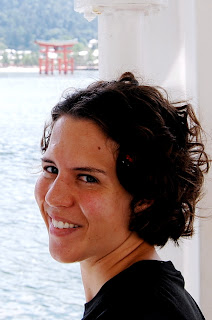
Okinawa in early March. Beautiful beach — too cold for swimming.

Time to catch up. So let's go!

Remember how we went to Yokohama for a work conference in early March? The conference was to help JETs who are leaving the program and returning to their home countries this summer prepare for that transition and get ready to find a new job. The months are winding down now on our contract, and we had to tell the powers that be at the Board of Education when we would leave Japan so they could purchase our plane ticket home. So the date's now set — we'll be flying home for good Wednesday, August 18. (And yes, we will graciously accept all baked goods you might think of giving us to welcome us back *cough cough* chocolate chip cookies!)

With August creeping closer and closer, we've been more motivated to make plans to go see places and do things that we really want to do before we leave Japan. And one of those places was Okinawa, the string of islands that extends from Japan's southern tip all the way to Taiwan. It's subtropical, it's sunny, it's beautiful. It'd have been a shame to miss it. So rather than head directly back to Hiroshima at the end of the conference, which ended on a Wednesday, we flew to Okinawa instead and finished out the week there.

You're probably familiar with Okinawa, right? Famous for the Battle of Okinawa at the end of World War II, during which one-quarter of the civilian population of Okinawa died. The U.S. was trying to seize Okinawa to use as a base for invading mainland Japan. The Japanese waged numerous kamikazi attacks — more than 1,500 planes — and there were mass casualties on both sides. When it became apparent that the Allies were winning, many Okinawan civilians committed mass suicide, with families gathering around grenades (given to them by Japanese soldiers) or leaping off cliffs. Wikipedia informs me that some historians believe that Okinawa led directly to the atomic bombings of Hiroshima and Nagasaki, as a way to avoid a ground invasion of the Japanese mainland. Since the Japanese were so fierce in their defense of Okinawa, with so many casualties and mass suicides, military strategists looked for an alternative way to subdue the mainland.

Okinawa has been in the news often recently because there's been a big push by the Japanese to move the U.S. Futenma military base out of Okinawa. The current prime minister of Japan pledged during his campaign to oust the base, but he recently went back on that promise and now says it's not realistic. I'm not sure if this is a big story in the U.S. but it's gotten a lot of attention in Japan. In late April around 90,000 protesters in Okinawa held a rally against the base. Luckily that stuff wasn't going on when we visited.

It was a little early in the year for the trip, actually. Going in March meant there wouldn't be a ton of tourists yet and the weather would be very pleasant, not too hot. The downside was that the sea was still too cold for swimming. I wasn't terribly bothered by this though since I planned to go SCUBA diving, and Joe isn't so interested in swimming in the ocean with all its creepy crawly stingy bitey creatures.

Joe booked us a budget hotel in the red light district. He didn't know it was in the red light district. But it most definitely was. Every night there would be a line of dodgy looking pimpy guys dressed in black, wearing sunglasses, gathered around the front doors of clubs lining the street leading up to our hotel. Really no idea what they were doing, but they made me a little uneasy. Come to think of it, that might have been the only time I've ever felt remotely unsafe in Japan. Not really unsafe. Just uncomfortable. It was shady. But with a guy as big as Joe with me I really don't have to worry.

The first thing we did Thursday morning was head to the only public beach we could find on our map of Naha. This is what we found:

Nooooooooooooooooooo!

I was a bit perplexed why the Japanese ran this highway right in front of this beautiful beach, but there must have been a good reason. Right? Looking at the map again, we realized the picture of the beach had been taken from the highway so that it wasn't shown. Of course we could see the highway clearly drawn on the map in front of the beach, but I guess it just hadn't registered. The water was a beautiful turquoise nonetheless, and we got to watch some Russian dudes in Speedos go for a swim — the only ones hearty enough to attempt such a thing in those still very chilly waters. Later we caught a bus out of town to a resort where we spent time on the beach pictured at the top of this post.

It really would have been better if we could drive in Okinawa, as there's not much in the way of public transportation. But with our international driver's licenses having long since expired (they were only good for one year after we left the U.S.), we weren't able to rent a car. So we had to make do sticking close to Naha.

Aside from the beach, Okinawa itself had an overall more relaxing vibe than the rest of Japan. I've often heard Japanese people say that Okinawa feels like a foreign country. There are plenty of taco joints there, the clothing is a bit more relaxed, the public transportation's not so great and the local dialect is significantly different. All true, though I wouldn't go as far as saying that it didn't feel like Japan. There was still an awful lot of concrete and characterless buildings crowded one on top of the other, just like the rest of Japan. It basically felt like Japan with a little more kitschy tourist vibe in spots. Case in point:


Obama says "Irasshaimase" (Welcome, At your service.) And his chest says "Oppai" (Boobs). I wonder what the Japanese would think if we posted signs like this of Japan PM Yukio Hatoyama in Hawaii? Hmmmm...


On the walk down the shopping arcade we came across these traditional Japanese shamisen featuring snakeskin, camouflage or goya, the bumpy bitter melon so popular in Okinawan cuisine. Wanna jam on one of these?

We ate a lot of goya chanpuru (bitter melon pictured at left cooked with tofu and Spam — swiped this pic from the Net) and tacos, and also paid a visit to the A&W restaurant for root beer floats, something you don't find elsewhere in Japan (most Japanese people hate root beer). Nago's Pineapple Park was a bit too far away for us to easily reach, so we hit a local pineapple joint instead to taste tested pineapple wine. It was truly awful. I really wanted to like it, really did, but... it was bad.

Other points of interest: Shuri Castle (meh). A traditional Chinese garden (gorgeous). SCUBA diving (incredible). I'll talk more about the latter two in the next posts.

Where I've been

Leaves at Mitaki Temple on a fine spring day.

So I've been gone a while. Maybe you've noticed. Life kinda picked up speed this spring and I simply have not been able to keep up with documenting it all. Since my last post about our jaunt to Yokohama, Joe and I have gone into traveling overdrive, visiting Okinawa, China, Hong Kong and Macau. There was cherry blossom season and all its accompanying flower gazing, and a couple of kimono/yukata wearing lessons, and a lovely afternoon spent at Mitaki Temple. Plus I've picked up two new conversation partners that I'm meeting with each week.

And while I haven't been writing here on Lost in Transition, I've still been periodically contributing to JetWit.com and working quite a bit on the Wide Island View, the Hiroshima JET newsletter turned webzine that I edit with my partner in crime, Joshua Zimmerman. Besides writing some pieces for JET publications in other prefectures to help cross promote our publications, I also recently wrote an article for the May edition of the JET alumni magazine in New York, which will be published soon. And, feather in our cap, the Wide Island View was just named the Best Online Resource of the year by National AJET, which I'm really happy about. I've been working with some of the NAJET representatives and other JET publication editors on creating a new national JET webzine, basically a larger version of the Wide Island View that will make it easy for JETs in every prefecture to create their own online publication in a centralized space.

So things have been fine, just BUSY. But I hate getting so behind in the blog, so I'll be writing more soon about it all. Just thought you should know.

Monday, March 22, 2010

Wandering 'round Yokohama's Chinatown

In early March Joe and I went to Yokohama, a suburb of Tokyo, to attend a conference for JETs who will be leaving the program and returning to their home countries this summer. While we were there we paid a visit to Chinatown.


Although Yokohama's Chinatown is one of the largest Chinatowns in the world, it was much different from the ones I've seen in San Francisco and Bangkok in that it was so much more sedate. The other Chinatowns I've visited have had a crowded, frenetic atmosphere, but this one was clean and peaceful, without too many people milling around. Though, I suppose that could have been because we visited during business hours on a Wednesday afternoon.


It seems that the dish of choice in this Chinatown is shark fin soup. A number of restaurants we passed were serving it, though we didn't realize this until after we'd already eaten lunch and really started walking around. I don't think I would have tried it anyway though. It's a delicacy, so it's expensive, and plus I think I have a problem with the idea of sharks being killed just so we can eat their fins.


My Japanese teacher tells me that the fins don't have much of a taste at all. They just soak up the flavor of the broth.

Another interesting dish we passed on the street: pigs feet. I'd just eaten so I didn't try this... but it doesn't seem very appetizing anyway.


Plenty of places also were selling nikuman, steamed buns with some meat inside. Joe and I absolutely love these things. You can buy them in any Japanese convenience store, and we're definitely going to miss them when we leave Japan.


All previews of things to come, since Joe and I will be taking a trip to China later this spring.

Saturday, March 20, 2010

Plum blossoms at Shukkeien Garden

One thing about Hiroshima that I really love is how there are always flowers blooming no matter what time of year it is. The weather is mild enough to allow this, and the Japanese are very conscientious about planning their gardens so various flowers bloom year-round. Consequently, winter is not nearly so dreary around here as it is back in Ohio.

I still remember the spring we had in Ohio before moving to Japan. It was the tail end of winter and the weather was uncharacteristically warm. We walked around town admiring the tulips and other flowers that bloomed during this warm snap. Then, in true Ohio style, the mercury dipped some 30 or 40 degrees overnight and the freeze killed everything. So much for the flowers that spring. You could say I was a bit pissed.

That doesn't happen in Hiroshima. The weather here is very stable and predictable, with a slow, steady roll between each season.

In February the major flower to bloom is the plum blossom. They come out about a month before the cherry blossoms, and though they're not as loved by the Japanese as cherry blossoms, they look pretty similar.

The small but excellent Japanese garden in Hiroshima city, Shukkeien Garden, features a grove of plum trees that burst into clouds of white and pink petals come February. Here are a few pictures from our trip there on the last day of February.


Tuesday, March 16, 2010

The mystery of the randoseru

With spring break rapidly approaching and the beginning of a new school year coming up in April, now seems as good a time as ever to talk about Japanese school supplies. Specifically, backpacks.

All elementary school children in Japan carry the same style backpack, called a randoseru. The randoseru are sturdy bags made of leather or a similar kind of synthetic material. They look like this:


This kind of backpack has caught the interest of my sister-in-law, who is an elementary school teacher in Indiana. She's been collecting various Japanese objects to use in her classroom to teach her students a little about Japan, and she was interested in getting her hands on one of these. So last Christmas I made a point to stop and look at them when I was in the Sogo Department Store downtown.

...and received perhaps the biggest sticker shock of my life:


That's right, the above bag is 60,900 yen. Using a conversion rate of 90.6 yen to the dollar, that makes this bag ... $672. $672 for a backpack? What, is it diamond studded? Lined with mink fur? Does the bag perform sexual favors? What on earth?

After rationalizing that I must be looking at a luxury brand name bag for rich kids (who can afford bags that perform sexual favors), I went to look at other racks of randoseru in the store.

Same story.

These? 45,150 yen ($498).

Oo! How 'bout this pink one?


Oh, only 39,900 yen ($440). Maybe that's the fake leather.

I checked other department stores and found similar prices there as well. I guess I don't have to tell you that my sister-in-law didn't get a Japanese backpack for Christmas.

To be fair, elementary school children are given their randoseru in first grade and use the same bag all six years of elementary school, so they are durable bags. And when you figure that a lot of American school kids end up buying a number of backpacks over the course of elementary school, that adds up too. But, the Japanese families are still clearly spending much more.

It's beyond me how these bags can cost so much. Yes, a fine leather bag wouldn't be cheap, but $600? Really? Why are these bags so significant? Why are Japanese parents willing to pay such ludicrous prices? Why does a little kid need such an expensive bag? Seems to me people are getting fleeced by some big corporate executives who are undoubtedly laughing all the way to the bank. It's just one of many aspects of Japanese culture I have yet to understand.

Monday, March 15, 2010

Farewell, sweet stove


I'm not sure if I've mentioned this before, but Joe's certainly heard me complain enough about it: Japan doesn't use central heating or insulation. Windows are single pane. Needless to say, though Hiroshima does not morph into the arctic tundra each winter, it is still damn cold.

Lucky for me, the main teachers' office does have a few electric heaters, though by themselves they're not powerful enough to keep everyone out of hats and gloves while they work. To provide proper warmth, they bring out a kerosene stove. As you can see in the picture above, I am lucky enough this year to be seated at the desk directly next to the stove, so I have had the next best thing to a fireplace just a few feet away. Every time I'd leave my desk to go freeze my ass off in the bathroom or break room, I'd come back in and warm up again in front of the stove. In case you're wondering, they place a kettle of water on top to steam off so the air doesn't get too dry.

The stove basically serves as the school's water cooler. Everyone comes and wastes a few minutes getting toasty by the stove. So if I'm not busy there's usually someone hovering near my desk to chat with.

Once in a while it's a little stinky, but there seems to be enough people coming and going from the office that I suppose we get enough ventilation. I haven't asphyxiated yet, anyway.

Despite the electric heaters up by the ceiling and this kerosene stove, the area beneath my desk still manages to feel like a refrigerator. I combat that with a mini electric heater under my desk. Between all these heat sources and my blanket, I manage to stay warm in the office during the winter. The classroom, well — that's another story. More than half my classes are in a room with a stove as the only heat source, and they are very chilly over the winter. That same room also lacks an air conditioner, so it absolutely roasts in the summer time, too. American kids don't know how good they have it what with their central heating and air conditioning and all.

Anyway, the whole point of all this is to say that today they turned off the stove. Or rather, they never turned it on. It was a gloomy rainy day today but the temperature's been slowly rising, so I guess they figured the stove's not needed anymore. So today I mourn the loss of my beloved stove. On the bright side, it's just another reminder that the cherry blossoms will be here in a couple weeks.

Sunday, March 14, 2010

A little local flavor in Kyushu

I just want to share a few last photos from our trip around Kyushu that didn't fit in to the other posts. Kyushu had it's own quirky character. I really liked the place.

For one thing, the first thing that greeted us outside Beppu train station was this bizarre statue:


The words engraved on it in English say "The man called 'Shiny Uncle' who loved children." And there's a baby demon riding his coattails. Creeeeeepy! Yet delightfully absurd! This is apparently the way the people of Beppu have chosen to immortalize the founder of their great city.

Another cool thing about Beppu? This dude.


This is actually a portable shrine that can be carried through the streets. Wikipedia informs me this guy is considered a tengu, a class of supernatural creatures found in Japanese folklore, and also one of the best known monster-spirits. For a long time they were seen as disruptive demons and harbingers of war, but over time their image has softened and they are now seen as protective spirits of the mountains and forests.

So this guy with the long red nose made random appearances around town. There'd be little images of him posted in various places along the street, above shops or whatever.

Another thing I enjoyed about Beppu was a very wabi-sabi traditional old street market that we had to walk through between the train station and our hotel each day. It was basically a lot of gray-haired Japanese with modest stalls selling clothes, fruit, fish and various Japanese foods. The fish in this place was so fresh that some of the fish laying on ice were still gasping for air (including these).


Later on in the trip in Kumamoto, we stumbled across a couple of places that made for a good chuckle along the city's main shopping arcade, the first one being this Thai restaurant:

We're used to seeing some pretty unfortunate Engrish in Japan, but this was just way out there. Could something really be mistranslated this horribly?

Turns out no. In sharing the photo on Facebook, a friend more in-the-know than us informed us that this is a restaurant chain that funds sexual health and family planning clinics in Thailand. Free condoms with every meal. Their slogan? "Our food is guaranteed not to cause pregnancy." Oo, my mouth's watering. Tempting, but we skipped it to eat raw horse instead.

Further up the street one of the shops had a display out on the street with various weight loss supplements, including...


Jesus Body. Jesus Body! Now who wouldn't want a Jesus Body, lean, rippling muscles, six pack! Oooh boy! Too bad we can't reverse this on the Japanese and advertise Buddha Body supplements back home... guess we don't need any help achieving that, huh.

Slick Jesus Body package designers woo us with this message:

New discovery to be kept secret from others.
This discovery is a secret.
I can lay it down because I am correct.
We will not make you sorry.
Pleasure to have the real thing.
I really longed for this.
Japanese Engrish is so cute. Who could make Jesus into something cute? The Japanese.